The Directory Service Is Unavailable Try Again Later or Choose Another Dc
The Domain Name System (DNS) server is where all of the domain names for the sites you've visited are stored. When searching a domain name in a web browser, information technology is forwarded by your router to a DNS server. If the item site's domain name has been saved, it then returns the corresponding IP address. This makes the loading process for those sites particularly faster.
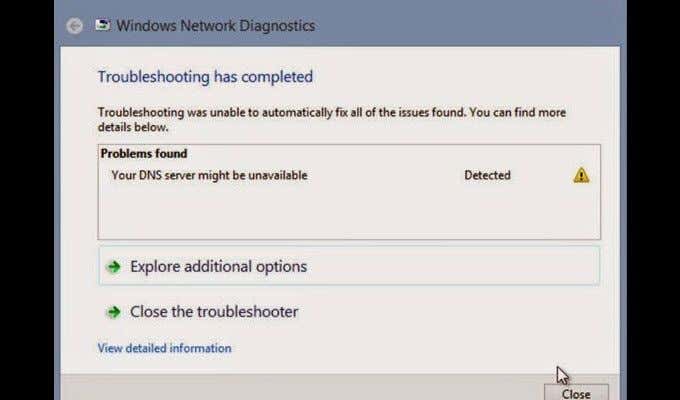
As great as this process is, information technology'southward not uncommon for the DNS server to fail to institute a connectedness from time to time. Attempting to troubleshoot your web browser in this instance can often consequence in a 'DNS server not responding' fault.

Many factors could crusade this particular mistake to show up on your screen. The well-nigh prominent of which is the possibility that the server itself is currently experiencing an outage. Luckily, this problem is often accompanied past a few easy solutions.
How To Gear up The "DNS Server Unavailable" Error
Accept you've received an error that the DNS server is unavailable? For a quick fix, these issues can sometimes be corrected by something every bit simple equally irresolute browsers, messing with a few of your firewall settings, or rebooting your router. It'll exist up to you to figure out the crusade and subsequent correction for the problem.
Start past using a different browser for the web pages you're trying to open. This means that if you're currently receiving the mistake while using the Mozilla Firefox browser, switch it upward to Microsoft Edge or Google Chrome. Should the problem persist, we can move on to testing out other devices.
Attempt to open up a webpage using a mobile device, on the same network, to ensure that the problem isn't the result of hardware failures. It would too be benign to attempt to connect to the same webpages using your data plan to identify if the cause is, in fact, with the DNS server.
In one case you've exhausted these steps, reboot your router. If the "DNS server unavailable" error is even so present, we'll have to undergo a few more than effective methods.
Flushing Your DNS (Windows)
The about effective method for fixing the upshot with the DNS server being unavailable is to affluent it using Command Prompt.
- Pull upwards the Run dialog by simultaneously pressing the Windows key and R key.
- Type cmd into the field and press Enter.
- In the Command Prompt window, type ipconfig /flushdns and press Enter.

- Follow up by typing ipconfig /release and press Enter.

- Finally, type ipconfig /renew and press Enter.

- Close out of the Command Prompt window and reboot your system.
Flushing Your DNS (MacOS)

You can too flush the DNS on a Mac. The way in which you lot practice this will vary slightly depending on the version of Mac your computer is running. It often only involves a modify in the syntax used during the process.
- Open up a Finder window and so caput into Applications, followed past Utilities, and ending in the Terminal.
- Enter in the following syntax pertaining to the version of MacOS y'all're currently using:
- MacOS Loftier Sierra – sudo killall -HUP mDNSResponder; sleep 2; repeat macOS DNS Cache Reset | say
- MacOS Sierra – sudo killall -HUP mDNSResponder;say DNS cache has been flushed
- MacOS Mojave – sudo killall -HUP mDNSResponder;sleep 2;
- MacOS X El Capitan/Yosemite – sudo dscacheutil -flushcache;sudo killall -HUP mDNSResponder;say cache flushed
- Printing the Return key, enter your password, and so hit the Return cardinal once again.
- Await the audio alert that indicates a successful DNS affluent before exiting the Last.
The MacOS X cache clearing will need a few added steps in guild to fully flush it out. Y'all'll have to affluent both MDNS and UDNS caches on top of the steps previously taken.
Before exiting from the Terminal, perform the following commands:
- For the MDNS enshroud, type sudo discoveryutil mdnsflushcache
- For the UDNS enshroud, blazon sudo discoveryutil udnsflushcaches
Remove Multiple Antiviruses

"You can never have too much protection." This may exist somewhat true in the existent world, simply in the world of technology, having multiple antivirus programs installed on the aforementioned computer can actually hinder the protection provided.
Check to see if y'all have two or more antivirus programs currently running equally this may be the reason for the DNS issue. Once you disable all boosted programs, reboot your system and the trouble should resolve itself.
Ensure that moving forrad you only keep a single software program running to help defend yourself from unwanted malware attacks. This non simply increases security simply can help you avert running into more than DNS server errors.
Changing DNS Servers

If y'all've already attempted all fixes written here and are still receiving the aforementioned "DNS server unavailable" error, it may be in your all-time interest to alter your DNS servers. At that place are enough of public DNS from which to choose, Google'due south free DNS being one of the more pop choices.
The procedure for this is very simple and tin exist done in a few clicks, depending on where you lot choose to change it. We'll be using the Windows operating system in each of our examples.
DNS Changes via Router

- Access your router by launching your web browser and inbound the Default Gateway address into the URL bar.
- You lot can observe the Default Gateway past opening a Command prompt window, typing ipconfig, and pressing Enter. Re-create the numbers located beside Default Gateway in the pulled up information.

- Login to the router using the proper credentials.
- Locate your internet account information which tin ofttimes be found in a similarly named tab.
- Navigate to the DNS server and select the pick that best mirrors your used internet protocol (IPv4 or IPv6).
- Enter the address of the DNS server you desire to use in identify of the current one.
- Google'southward DNS server will exist 8.8.viii.8 in the preferred DNSv4 and viii.eight.4.4 in the alternate DNS server. In the case of IPv6, you'll want to utilise 2001:4860:4860::8888 and 2001:4860:4860::8844 respectively.
- Salve the edited information and get out the router interface.
DNS Changes via Windows OS

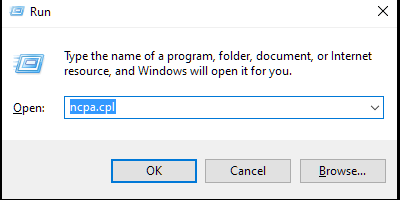
- Access your network connection properties by launching the Run function (Windows key + R) and typing in ncpa.cpl. Press Enter.
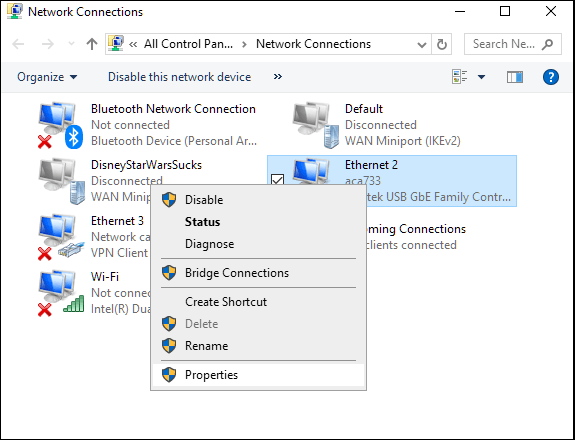
- Windows 10 users tin right-click the Windows icon at the lower left of the desktop screen and select Network Connections from the carte du jour.
- Select the network adapter currently in utilise. WLAN for WiFi connections and LAN for directly connection, ordinarily via ethernet cablevision.
- Windows x will have your options on the left side panel. Select one and choose Alter adapter options from the master window.
- Right-click your choice and select Properties.
- In the Networking tab, highlight your IP version (v4 or v6) from the card and click the Backdrop button.
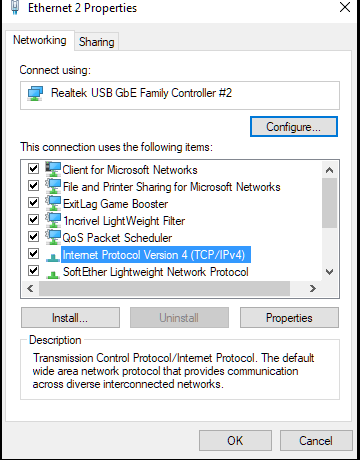
- Click the radial for Employ the following DNS server addresses: to enable editing capabilities.
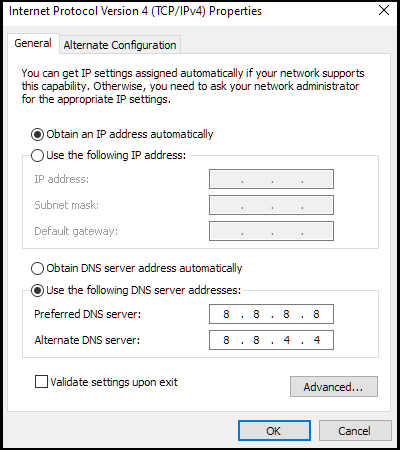
- Enter in the DNS server addresses yous plan to use.
- If yous had been using a previous DNS server non obtained automatically, call back to annotate the addresses merely in case y'all want to return using them at a afterwards date.
- Finalize the changes by clicking OK.
Exam New DNS Server
Once the DNS servers have been inverse, open up a browser and attempt to launch a well-known site like world wide web.google.com. If the site is immediately attainable, then the new DNS is operation properly. If not, enter one of Google's IP addresses, 172.217.16.195, straight into your browser and hit Enter.
Wait for the familiar Google logo and search bar to announced. If this also fails, then the problem may lie with the net and not the DNS server itself. Contact your isp for additional assist if this is the case.
Practise not share my Personal Data.
Source: https://helpdeskgeek.com/help-desk/how-to-fix-the-dns-server-unavailable-error/
0 Response to "The Directory Service Is Unavailable Try Again Later or Choose Another Dc"
Post a Comment